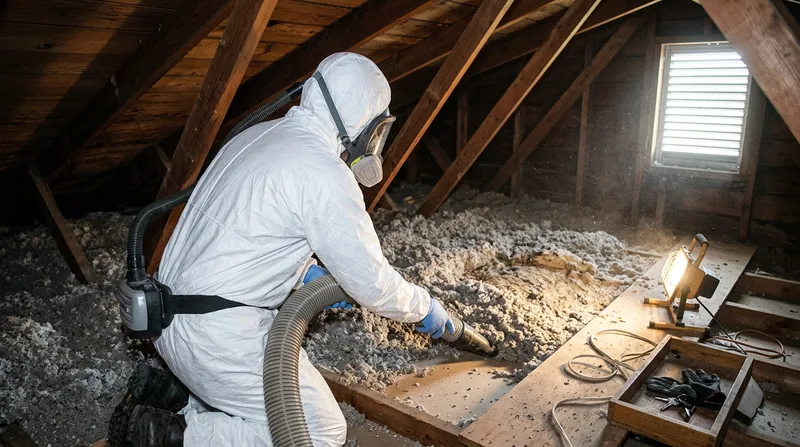




Insulation Removal in Dayton is the critical first step before any spray foam retrofit. Homes across the Miami Valley, especially mid-century ranches in Kettering and Huber Heights, often carry decades of settled, compacted fiberglass or mineral wool insulation that has lost its R-value and sometimes harbors moisture, rodent damage, or both. Before we spray new foam into an attic, crawl space, or wall cavity, we remove the old material completely. This work is not glamorous, but it is essential. A home cannot perform if it is built on a failed foundation of insulation, and the Dayton climate, with cold winters and hot, humid summers, demands that every retrofit start clean.
Why Insulation Removal Matters in Dayton Attics and Crawl Spaces
Settled insulation loses thermal resistance over time. In homes built in the 1960s and 1970s across Kettering, Huber Heights, and Trotwood, attic insulation has compressed under its own weight and gravity, often dropping from an original R-30 or R-38 to R-15 or less. Moisture trapped beneath or within that material accelerates mold growth and attracts rodents. Crawl spaces under older homes in the Oregon District and South Park neighborhoods stay cold and damp year-round, and old fiberglass becomes a sponge. The Miami Valley's seasonal vapor drive reverses twice a year: humid summer air pushes moisture inward, and dry winter air pulls it back out. Old insulation cannot manage that cycle. We remove it entirely before installing spray foam, which seals and controls moisture rather than absorbing it.
- We extract all old insulation, debris, and contaminated material from attics, crawl spaces, and wall cavities before any new foam is applied.
- We identify and document moisture, rodent damage, or structural issues found during removal so you know what you are dealing with.
- We dispose of all removed material in accordance with local Dayton waste regulations and do not leave the job until the space is clean.
- We prepare the substrate (roof decking, band joists, floor framing) so it is dry and ready for foam application.
Removal is not optional on any retrofit. A sound attic or crawl space is the only platform on which spray foam performs as designed.
Dayton example: A 1970s ranch in Kettering with an uninsulated rim joist and 4 inches of settled attic insulation had a crawl space that sweated all summer. We removed 800 board feet of old fiberglass, found rodent nesting in the band joist, cleared it out, and then sealed the rim and applied closed cell foam to the rim joist. The homeowner's basement stayed dry that following summer for the first time in years.
How We Remove Insulation in Dayton: A Clear Process
Insulation removal is a methodical job. We bring a vacuum truck or containment system, isolate the work area with plastic sheeting, remove all old material into sealed containers, and dispose of it properly. The goal is zero dust, zero cross-contamination into your home, and a clean, dry substrate ready for new foam. We coordinate with you on timing and access, and we work around your schedule.
- We inspect the space and identify all insulation type, condition, moisture, and access points.
- We set up containment barriers and mechanical ventilation to keep dust and debris confined to the work area.
- We remove all old insulation, pack it into sealed bags or bins, and haul it to a licensed disposal facility.
- We clean and dry the substrate, repair any damage to framing or decking, and verify the space is ready for foam.
- We provide a written summary of what was removed, what was found, and what condition the space is in for the next phase.
This process takes one to three days depending on the size and condition of the space. We then move directly into attic spray foam insulation, crawl space spray foam, or wall foam retrofit without delay.
Huber Heights example: A split-level home had 6 inches of old mineral wool in the attic and no rim joist insulation. The attic had a musty smell and the basement rim stayed cold. We removed the attic insulation in a single day, found mold on the roof decking where a roof leak had occurred years ago, documented it for the homeowner, dried the deck, and prepared for closed cell foam. The homeowner then contracted with a roofing specialist to address the leak, and we returned to foam once the roof was sealed and dry.
| Removal Type | Description | Common in Dayton |
|---|---|---|
| Fiberglass Batt and Loose-Fill | Rolled or blown-in fiberglass, often settled and compressed over decades. | Kettering and Huber Heights attics, 1960s to 1980s homes. |
| Mineral Wool Batts | Denser than fiberglass, retains moisture readily, prone to mold in damp basements and crawl spaces. | Older homes in the Oregon District and South Park; crawl spaces throughout the region. |
| Vermiculite (Suspect) | We do not disturb or remove suspect vermiculite; it may contain asbestos and requires a licensed professional assessment. | Some homes built before 1980; we flag it and refer. |
| Failed or Wet Insulation | Insulation saturated by roof leaks, plumbing failures, or crawl space moisture; must be removed and substrate dried before any new work. | Any home with unaddressed moisture; common in crawl spaces and attics with roof leaks. |
| Rodent-Contaminated Insulation | Old insulation with rodent nesting, droppings, or urine; removed entirely and disposed of as contaminated waste. | Mid-century homes throughout Dayton, especially those with uninsulated rim joists and gaps in the thermal envelope. |
Insulation Removal Cost in Dayton: What to Expect
Insulation removal in the Dayton area typically starts at around $950 for a standard attic or crawl space job. The final cost depends on the square footage of the space, the depth and density of the old insulation, accessibility, and what is found during the work. A 1,200-square-foot attic with 6 inches of settled fiberglass will cost less than a 2,000-square-foot attic with 12 inches of material plus moisture and rodent damage. Crawl spaces are priced similarly but often run higher because of the confined space, moisture control measures, and hauling distance. If the old insulation is wet, contaminated, or mixed with debris, the disposal cost and labor time increase. We provide a written estimate on site that breaks down the square footage, material type, and labor hours so you know exactly what you are paying for.
Do not compare insulation removal quotes by price alone. A contractor who quotes $400 for an attic removal may be planning to leave material behind, skip containment, or cut corners on disposal. A professional removal takes time, equipment, and proper disposal. We include containment, mechanical ventilation during work, complete haul-away, and substrate preparation in our estimate. For a detailed breakdown and to schedule a free estimate, call us at (937) 800-4951 or visit our pricing page.
What to Look for When Hiring an Insulation Removal Contractor Near Me in Dayton
Not all insulation removal contractors operate the same way. A professional removal contractor in Dayton should provide a written estimate that identifies the square footage, insulation type, and disposal method before any work begins. They should use containment and mechanical ventilation during removal to keep dust out of your home. They should be fully insured and able to provide a certificate of insurance on request. They should explain what they found, document moisture or damage with photos, and tell you clearly whether the substrate is ready for new foam or whether additional work is needed first. They should also be reachable after the job if questions arise. Ask for references from recent jobs in your area, Kettering, Huber Heights, or Centerville, and call at least two to confirm the contractor showed up on time, cleaned up completely, and delivered what was promised.
- Verify that the contractor is fully insured and ask to see a current certificate of insurance covering the work.
- Request a written estimate that specifies square footage, insulation type, and how the material will be disposed of.
- Ask whether they will use containment barriers and mechanical ventilation to prevent dust from spreading into your home.
- Check references from recent jobs in your neighborhood or nearby Dayton suburbs.
- Confirm that they will inspect and document the condition of the substrate before declaring the space ready for new foam.
Hiring a local, accountable contractor protects your home and your investment in new insulation. Contact us at Dayton Spray Foam Insulation for a free, no-obligation estimate and a clear explanation of what removal will cost and what we will find.
Insulation Removal in Dayton: Pricing Guide
| Service | Price | Details |
|---|---|---|
| Standard Attic Removal | Starting at $950 | Removal of settled fiberglass or mineral wool from 800-1200 sq ft attics, including containment, ventilation, and haul-away |
| Crawl Space Removal | Starting at $1,200 | Removal of insulation from crawl spaces with moisture control setup, disposal, and substrate preparation for foam |
| Contaminated or Wet Insulation | On estimate | Rodent-damaged, moldy, or water-saturated insulation requires site inspection to determine disposal method and labor |
| Travel and Mobilization | Included | No extra charge for service calls within Dayton, Kettering, Huber Heights, Centerville, and surrounding Greater Dayton areas |
| Free Estimate | No cost | Written estimate with photos and documentation, response within 24 hours at (937) 800-4951, no obligation to proceed |
Indicative pricing, the exact cost depends on square footage, finish, and site access. Free personalized estimate within 24h at (937) 800-4951.


