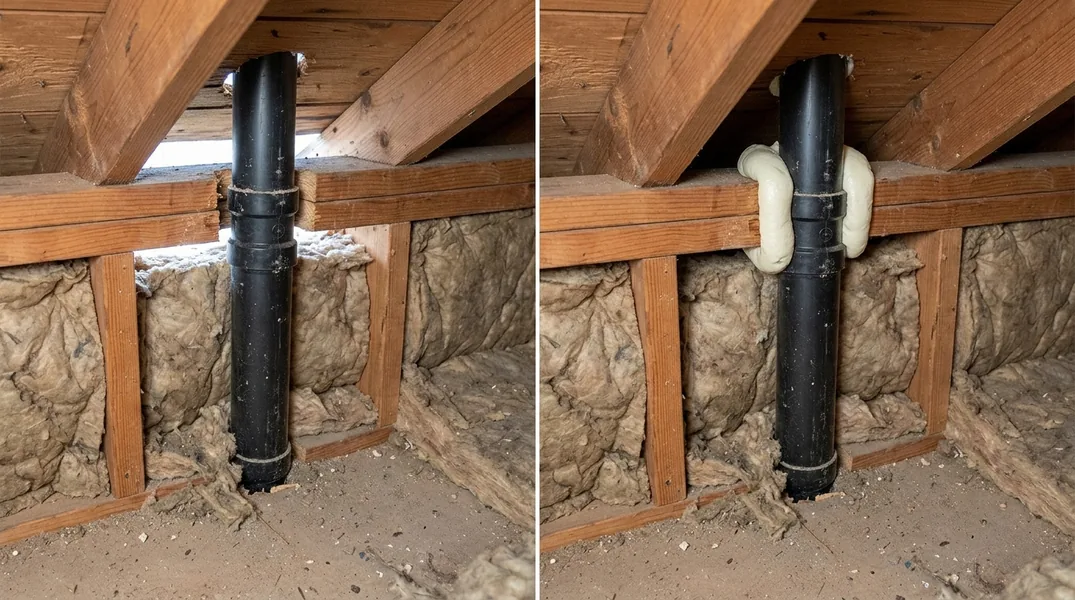
Why Spray Foam Insulation Matters for Your Dayton Home
If you're a homeowner in Dayton, you know that energy costs can eat up a significant portion of your monthly budget, especially during harsh winters and hot summers. Traditional insulation methods like fiberglass batts and blown-in cellulose have been the standard for decades, but they come with a major limitation: they don't seal air leaks. This means your heating and cooling systems work overtime to maintain comfortable temperatures, driving your utility bills higher than necessary.
Attic Spray Foam Insulation changes the game by creating an airtight seal that prevents conditioned air from escaping through cracks, gaps, and penetrations in your attic. When spray foam expands and hardens, it fills every nook and cranny, eliminating the thermal bridging that plagues conventional insulation. For homeowners serious about reducing energy waste and lowering their monthly bills, this represents a genuine opportunity to reclaim money that would otherwise vanish into thin air.
Understanding Spray Foam Insulation Cost in Dayton: What to Budget
One of the first questions homeowners ask is straightforward: what is the actual spray foam insulation cost? The answer depends on several factors unique to your home and project scope. Generally, spray foam insulation cost per square foot ranges from $1.50 to $3.50 for open cell applications and $3.50 to $6.00 for closed cell installations, though regional pricing and local market conditions in Dayton can influence these figures. The total cost to insulate attic space typically falls between $1,500 and $5,000 for an average-sized attic, depending on square footage and the type of foam selected.
Rather than viewing this as a pure expense, savvy homeowners recognize that spray foam insulation represents an investment with measurable returns. A spray foam cost calculator can help you estimate your specific project costs, but the real value emerges when you factor in energy savings. Many homeowners report 20 to 30 percent reductions in heating and cooling costs within the first year of installation. Over a 15 to 20 year lifespan, that translates to thousands of dollars in recovered energy expenses. To get an accurate pricing breakdown tailored to your home, reach out to Dayton Spray Foam Insulation at (937) 800-4951 for a personalized assessment.
The Energy Savings Payoff: How Quickly Does Spray Foam Pay for Itself?
The payback period for spray foam insulation is one of the most compelling reasons homeowners choose this solution. Unlike some home improvements that take decades to recoup their initial cost, spray foam typically breaks even within 3 to 7 years through energy bill reductions alone. This accelerated timeline means you're not just improving comfort; you're making a financially sound decision that puts money back in your pocket sooner rather than later.
The science behind these savings is straightforward. Air leaks account for roughly 25 to 30 percent of heating and cooling energy loss in typical homes. By sealing those leaks with spray foam, your HVAC system operates more efficiently, running fewer cycles to maintain your desired temperature. During Dayton's cold winters, this means less strain on your furnace. In summer, your air conditioning doesn't have to work as hard to keep cool air from escaping. Over time, reduced system wear also extends the life of your heating and cooling equipment, providing an additional financial benefit that extends well beyond energy savings alone.
Open Cell vs. Closed Cell Spray Foam: Which Offers Better Value?
Open Cell Spray Foam Insulation and Closed Cell Spray Foam Insulation serve different needs and budgets, and understanding the distinction helps you make an informed decision. Open cell foam is lighter, less dense, and costs less per square foot, typically ranging from $1.50 to $2.50. It provides excellent sound dampening and allows some moisture vapor transmission, making it suitable for interior applications where vapor barriers aren't a concern. Closed cell foam, on the other hand, is denser, more rigid, and offers superior moisture resistance and higher R-value per inch, costing $3.50 to $6.00 per square foot. It's the better choice for attics, crawl spaces, and areas prone to moisture.
For most Dayton homeowners looking to maximize energy savings in their attics, closed cell foam delivers the superior return on investment despite its higher upfront cost. The increased R-value means you need less material to achieve the same thermal performance, and the moisture resistance prevents long-term damage that could compromise your insulation's effectiveness. When calculating true cost per unit of insulation value, closed cell often wins the efficiency argument. Your choice should ultimately reflect your specific needs, budget constraints, and the advice of a professional who understands your home's unique characteristics.
Additional Home Benefits Beyond Energy Savings
While lower energy bills are the primary draw, spray foam insulation delivers several secondary benefits that enhance overall home value and quality of life. The airtight seal created by spray foam also improves indoor air quality by reducing the infiltration of outdoor pollutants, allergens, and dust. This is particularly valuable for families with respiratory sensitivities or allergies. Additionally, the structural reinforcement provided by rigid foam, especially closed cell varieties, can actually strengthen your attic framing and provide some protection against wind uplift during storms, a consideration for any homeowner in regions subject to severe weather.
Noise reduction is another underappreciated advantage. Spray foam's density and expansion characteristics dampen sound transmission between your attic and living spaces, resulting in a quieter home. If you live near a busy road or under flight paths, this acoustic benefit adds genuine comfort value. Furthermore, by reducing air infiltration, spray foam helps maintain more consistent indoor humidity levels, which protects wooden structures, reduces the risk of mold growth, and creates a more comfortable living environment year-round. When you combine these benefits with long-term energy savings and increased home resale value, the case for spray foam becomes even more compelling.
Getting Started: Your Next Steps to Lower Energy Bills
If you're ready to explore how spray foam insulation can reduce your energy costs and improve your home's comfort, the first step is scheduling a professional evaluation. Every home is different, and a thorough assessment allows you to understand your specific air sealing opportunities and receive an accurate cost estimate. Dayton Spray Foam Insulation offers free estimates that give you clear insight into project scope and expected savings. Our team can also discuss whether Wall & Injection Foam Insulation might complement your attic work for maximum efficiency gains throughout your entire home.
Don't let another season pass with energy dollars slipping away through air leaks and poor insulation. Contact Dayton Spray Foam Insulation today at (937) 800-4951 to discuss your home's insulation needs and discover how spray foam can transform your energy bills and comfort level. We serve homeowners throughout the Dayton area and are committed to helping you make an investment that pays dividends for years to come.
Looking for a professional spray foam insulation contractor in Dayton? Dayton Spray Foam Insulation responds fast for all your spray foam insulation needs.
Get a Free Quote