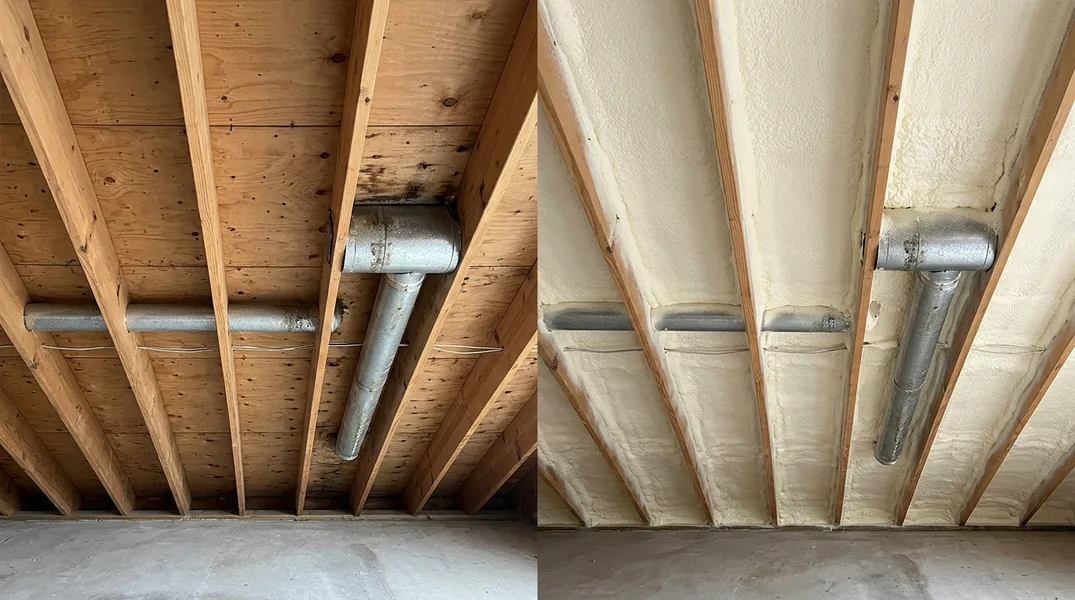
The Oregon District Challenge: Why Historic Homes Need Smart Insulation
Dayton's Oregon Historic District is a treasure of early 20th-century architecture. These charming homes feature original hardwood floors, period details, and character that newer construction simply cannot replicate. However, that same age and construction style creates serious energy efficiency problems that many homeowners struggle to address without compromising historic integrity.
Historic homes in the Oregon District were built with materials and methods that prioritize aesthetics over thermal performance. Walls often have open cavities with no insulation whatsoever. Basements tend to be damp, unfinished spaces with minimal moisture control. Attics may contain decades-old, settling insulation that has lost its R-value. These conditions drive up heating and cooling costs, create uncomfortable temperature swings, and can lead to moisture damage that threatens the structural integrity of your home. The challenge is finding an insulation solution that performs well while respecting the character and structure of a historic property.
Is Spray Foam Insulation Worth It for Historic Homes?
When you're researching insulation options for a historic Dayton home, the question of value becomes critical. Attic Spray Foam Insulation offers several compelling advantages that make it worth serious consideration, particularly for properties with the specific challenges found in the Oregon District.
Spray foam insulation delivers superior air sealing compared to traditional fiberglass or cellulose. It expands to fill every cavity, crack, and void, eliminating the thermal bridging that occurs with conventional batts. For historic homes with irregular framing, settling, or gaps created by age and movement, this comprehensive coverage is invaluable. The material also resists moisture infiltration better than traditional options, which is especially important in basements prone to dampness. In terms of long-term performance, spray foam maintains its R-value over decades without settling or degradation. When you factor in reduced energy bills, improved comfort, and protection against moisture-related damage, the return on investment becomes clear. However, the initial pricing is higher than conventional insulation, so understanding the full cost-benefit picture is essential for your decision.
Is Spray Foam Insulation Safe? Addressing Off-Gassing and Health Concerns
Safety is a legitimate concern when considering spray foam, and homeowners deserve accurate information. The primary safety discussion centers on off-gassing during and after installation. Spray foam insulation involves chemical reactions between isocyanates and polyols that release volatile organic compounds (VOCs) during the curing process. This is why professional installation in a properly ventilated space is non-negotiable, and your home should be vacated during application and for several hours afterward to allow adequate air circulation.
Once fully cured, which typically takes 24 to 48 hours, spray foam insulation becomes inert and poses no ongoing off-gassing risk. The material itself is inert and does not release harmful chemicals into your home's air. The key to safety is working with certified, experienced installers who follow EPA guidelines, use proper ventilation protocols, and ensure complete curing before occupants return. Open Cell Spray Foam Insulation generally has lower VOC emissions than closed-cell varieties, making it a preferred choice for homeowners with chemical sensitivity concerns. When installed correctly by professionals who understand these protocols, spray foam insulation is safe for residential use. If you have specific health concerns or sensitivities, discuss them with your installer before the project begins.
Common Spray Foam Insulation Problems and How to Avoid Them
Understanding potential issues helps you make an informed decision and avoid costly mistakes. One of the most common spray foam insulation problems is improper installation, which can result in incomplete coverage, uneven expansion, or insufficient curing. Poor installation may also trap moisture within walls, leading to mold growth or wood rot over time. Another concern is incompatibility with certain materials. Spray foam can degrade some plastics and cause issues if applied over certain vapor barriers without proper understanding of your home's moisture dynamics.
For historic homes specifically, improper application can damage original materials or alter the structure in ways that compromise historic value. Some homeowners also report issues with contractor quality and follow-up service when problems arise. The best way to avoid these problems is to hire experienced, licensed professionals who specialize in historic properties and understand the unique requirements of older homes. Ask for references, verify licensing and insurance, and request a detailed written estimate that explains the specific approach for your property. In Dayton, where many homes have historic significance, choosing a contractor familiar with preservation standards and moisture management in older structures is essential. Request a free estimate and use that consultation to assess whether the contractor understands your home's specific needs.
Spray Foam Insulation Pros and Cons: A Balanced Overview
Every insulation solution has tradeoffs, and spray foam is no exception. The primary advantages include superior air sealing, excellent moisture resistance, high R-value per inch, long-term durability, and the ability to fill irregular spaces that traditional insulation cannot address. For historic homes with open cavities and damp basements, these benefits are particularly valuable. Spray foam also reduces air infiltration that contributes to heating and cooling loss, resulting in measurable energy savings. The material does not settle or degrade over time, maintaining its insulating properties for decades.
The main disadvantages include higher upfront cost compared to fiberglass or cellulose, the need for professional installation, potential off-gassing during application, and the fact that it is permanent and difficult to remove if future modifications are needed. Some people have concerns about the environmental impact of petroleum-based foam products, though closed-cell varieties are increasingly made with more sustainable blowing agents. For historic properties, there is also a consideration about whether spray foam is appropriate for certain applications where traditional methods might better preserve the home's character. Closed Cell Spray Foam Insulation offers superior moisture and air sealing but costs more, while open-cell varieties are less expensive but more permeable. Weighing these pros and cons against your specific situation, budget, and priorities is crucial before committing to any insulation project.
Solving Damp Basements and Open Cavities in Historic Dayton Homes
The Oregon District's historic homes frequently have uninsulated basements that are cold, damp, and uncomfortable. Traditional insulation approaches often fail in these spaces because they do not adequately address moisture. Spray foam insulation is exceptionally effective for basements because it creates a moisture-resistant barrier that prevents water vapor infiltration from soil and groundwater. When applied to basement walls, spray foam seals all cracks and gaps while resisting moisture absorption, protecting your foundation and preventing mold growth.
Open cavities in exterior walls are another defining characteristic of older homes. These cavities allowed for air circulation in an era before mechanical HVAC, but in modern times they waste energy and allow drafts. Wall & Injection Foam Insulation can be injected into existing cavities without requiring wall removal, making it ideal for historic properties where preserving the exterior facade and interior finishes is important. This approach addresses the thermal performance problem while maintaining the home's historic appearance. If your Oregon District home is struggling with cold, damp basement spaces or drafty walls with open cavities, spray foam offers a solution that respects the structure while dramatically improving comfort and energy efficiency. Contact Dayton Spray Foam Insulation at (937) 800-4951 to discuss how spray foam can be customized for your property's unique needs.
Looking for a professional spray foam insulation contractor in Dayton? Dayton Spray Foam Insulation responds fast for all your spray foam insulation needs.
Get a Free Quote