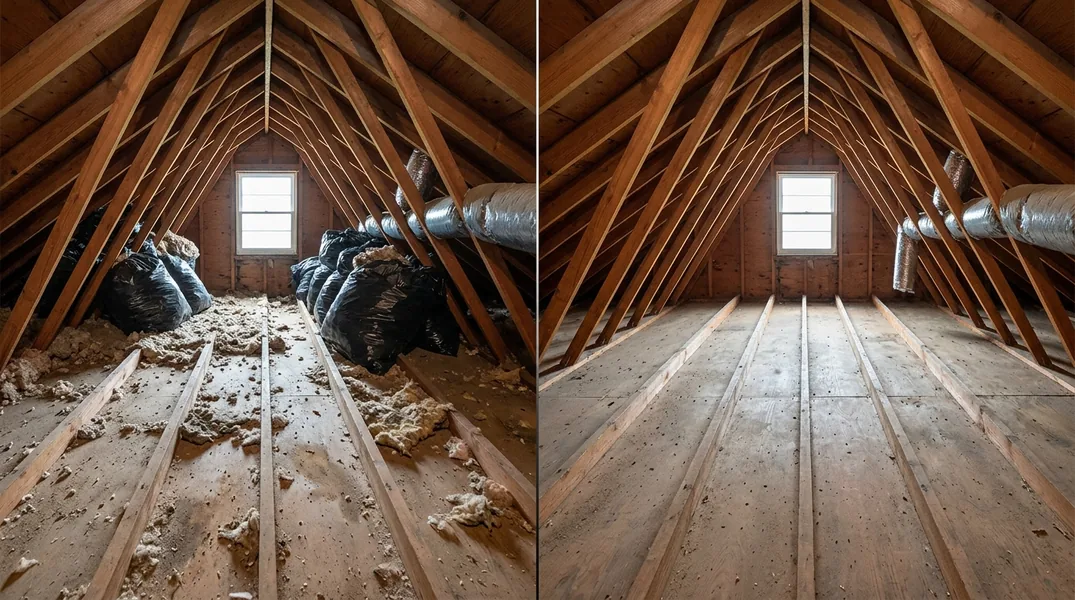
The Challenge of Thin Attics in Kettering and Huber Heights Ranch Homes
Ranch-style homes built throughout Kettering and Huber Heights during the mid-20th century share a common structural characteristic: limited attic space. These single-story homes were designed with shallow roof lines and minimal clearance between the ceiling joists and roof decking. While this architectural style creates charming, efficient living spaces at ground level, it poses a real challenge when homeowners want to upgrade their insulation for better energy efficiency and comfort.
The problem becomes even more pronounced when you consider what's already in those thin attics. Many older ranches have fiberglass batts or cellulose that has settled, compressed, or deteriorated over decades. Add in exposed rim joists around the perimeter of the structure, and you're looking at significant heat loss during Dayton's cold winters and unwanted heat gain during humid summers. Traditional insulation methods simply don't work well in these tight spaces, which is why homeowners are turning to spray foam as the modern solution.
Spray Foam vs. Blown-In Insulation: Why Spray Foam Wins in Tight Spaces
When comparing Attic Spray Foam Insulation to blown-in insulation, the differences become crystal clear in thin attic applications. Blown-in cellulose or fiberglass requires adequate depth to achieve its rated R-value. In a shallow attic, you simply cannot install enough material without compromising the structural integrity of your ceiling or creating fire hazards. Spray foam, by contrast, expands to fill cavities and gaps regardless of how tight the space is, creating a seamless thermal barrier that blown-in materials cannot match.
Blown-in insulation also settles over time, especially in attics where temperature fluctuations are extreme. This settlement reduces its effectiveness year after year. Spray foam does not settle. Once it cures, it maintains its insulating properties indefinitely, making it a true long-term investment for your home. Additionally, spray foam creates an air seal as it expands, blocking drafts and moisture infiltration that blown-in materials leave behind. For ranches with thin attics in the Kettering area, this air-sealing capability is invaluable.
Spray Foam vs. Fiberglass: The Superior Choice for Bare Rim Joists
Bare rim joists are one of the biggest sources of energy loss in older ranch homes. These exposed wooden beams around the perimeter of your home are often completely uninsulated, creating a thermal bypass that traditional fiberglass batts cannot adequately address. Fiberglass batts require a cavity to fit into, and rim joists often have irregular shapes, gaps, and mechanical penetrations that leave gaps even when batts are installed. These gaps allow cold air to flow directly into your basement or crawl space, reducing the effectiveness of your entire home's insulation system.
Closed Cell Spray Foam Insulation conforms perfectly to the unique contours of rim joists, filling every void and creating a continuous thermal envelope. The material adheres directly to the wood, preventing air from slipping around the edges. It also provides structural reinforcement to the rim joist itself. In Huber Heights, where winter temperatures regularly drop below freezing, this kind of comprehensive rim joist insulation can reduce your heating costs by 10 to 15 percent.
Spray Foam vs. Cellulose: Moisture Control and Durability in Attics
Cellulose insulation is often promoted as an eco-friendly alternative to fiberglass, but it has a critical weakness: moisture sensitivity. Cellulose absorbs moisture readily, which can compromise its R-value and create conditions for mold growth. In thin attics where ventilation is limited and condensation can accumulate during seasonal temperature swings, cellulose becomes a liability rather than an asset. If your attic develops even minor moisture issues, cellulose will degrade quickly.
Open Cell Spray Foam Insulation and closed cell spray foam both resist moisture absorption far better than cellulose. Closed cell foam is particularly moisture-resistant and actually acts as a vapor barrier, preventing humid indoor air from reaching cold attic surfaces where condensation forms. For homeowners in Dayton concerned about long-term durability and the health of their attic space, spray foam offers peace of mind that cellulose simply cannot provide. The material will not sag, compress, or deteriorate over the 30 to 50-year lifespan of your roof.
Best Insulation for Attic Applications: Why Professionals Choose Spray Foam
When energy auditors and insulation professionals are asked what the best insulation for attic spaces really is, spray foam consistently ranks at the top. The reason is simple: it solves multiple problems simultaneously. It provides superior R-value per inch of thickness, creates an air seal, resists moisture, does not settle, and adapts to irregular spaces that other materials cannot handle. For thin attics and exposed rim joists, these advantages are not just nice-to-have features; they are essential.
The versatility of spray foam also means that your attic insulation project can be customized to your specific situation. If your attic has adequate depth in some areas but limited space in others, your contractor can use different foam types or depths strategically. This tailored approach ensures maximum efficiency and comfort throughout your home. When you combine spray foam attic insulation with Wall & Injection Foam Insulation in your rim joists and exterior walls, you create a comprehensive thermal envelope that performs year-round.
Attic Spray Foam Insulation Cost in Dayton: What to Budget
Homeowners often ask about the pricing for spray foam insulation projects, and understandably so. Spray foam does cost more upfront than blown-in fiberglass or cellulose. However, this higher initial investment pays dividends through lower energy bills, reduced HVAC strain, and the elimination of future re-insulation projects. Most homeowners see a return on their investment within 5 to 7 years, and then enjoy savings for decades afterward. When you factor in improved comfort, better moisture control, and the peace of mind that comes with a durable, long-lasting solution, the true value becomes clear.
The actual cost of your project depends on several variables: the square footage of your attic, the depth of insulation needed, whether you are also insulating rim joists, and the specific type of foam (open cell or closed cell). For thin attics in ranch homes, closed cell foam is often the better choice despite its higher cost, because its superior R-value per inch means you achieve your target insulation level without adding excessive bulk. To understand the exact investment required for your home, reach out to Dayton Spray Foam Insulation for a free estimate. You can also call us at (937) 800-4951 to discuss your situation with an experienced contractor.
Looking for a professional spray foam insulation contractor in Dayton? Dayton Spray Foam Insulation responds fast for all your spray foam insulation needs.
Get a Free Quote