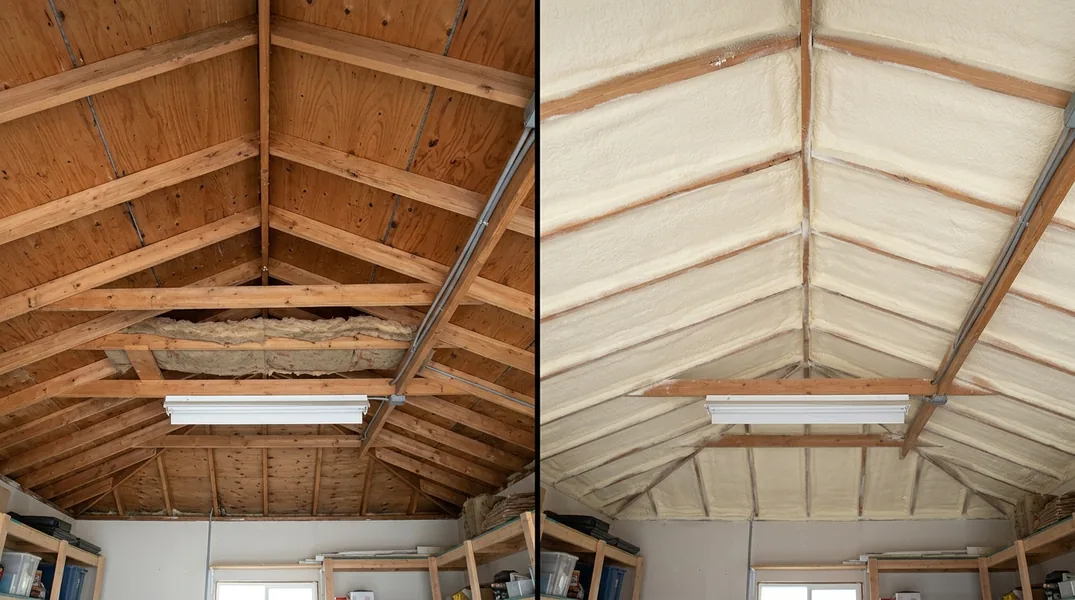
Do You Need a Permit for Spray Foam Insulation in Montgomery County?
One of the first questions homeowners in Dayton and the surrounding Montgomery County area ask is whether they need a permit before installing spray foam insulation. The short answer is: it depends on the scope of your project and your local jurisdiction's specific requirements.
In Montgomery County, most residential Attic Spray Foam Insulation projects do require a permit, particularly if the work involves structural changes, electrical work, or ventilation modifications. However, some smaller projects may fall under the category of routine maintenance and might not require formal permitting. The best approach is to contact your local building department or work with a reputable contractor like Dayton Spray Foam Insulation who understands the local codes and can handle the permitting process for you. We recommend calling us at (937) 800-4951 to discuss your specific project and whether permits will be necessary.
Understanding Open Cell vs Closed Cell Spray Foam for Compliance
When planning an insulation upgrade, understanding the difference between Open Cell Spray Foam Insulation and Closed Cell Spray Foam Insulation is crucial for both performance and compliance purposes. Each type has different characteristics that may affect how inspectors evaluate your project and what building codes apply.
Open cell spray foam is lighter and more flexible, making it ideal for interior applications where you want good sound dampening and air sealing without excessive rigidity. Closed cell spray foam, on the other hand, is denser and more rigid, offering superior moisture resistance and structural support. When it comes to inspections, inspectors will want to verify that the foam type you've chosen is appropriate for your specific application and that it meets current energy codes. The Closed Cell Spray Foam Insulation option is often preferred in attics because of its moisture resistance and higher R-value per inch, which helps homeowners meet or exceed minimum energy efficiency standards required by Montgomery County building codes.
What Is the Closed Cell Spray Foam R Value and Why Inspectors Care
Inspectors reviewing your spray foam project will pay close attention to the R-value, which measures the insulation's thermal resistance. The closed cell spray foam R value typically ranges from 6.0 to 7.0 per inch, making it one of the most efficient insulation options available for residential applications. This higher performance means you need less material to meet or exceed energy code requirements, which is why many Montgomery County homeowners choose closed cell foam for their attics.
During the inspection process, the building official will verify that your insulation meets the minimum R-value requirements set by the International Energy Conservation Code (IECC) and any local amendments adopted by Montgomery County. For attics in our climate zone, the typical requirement is R-38 to R-49, depending on your specific location. With closed cell foam at approximately 6.5 R-value per inch, you would need only 6 to 7.5 inches of material to meet these requirements, compared to significantly more depth if you were using traditional fiberglass batts. Understanding your project's target R-value helps you communicate clearly with your contractor and ensures the inspection goes smoothly.
The Inspection Process: What Happens After Your Spray Foam Installation
After your spray foam insulation is installed, Montgomery County will require a final inspection to ensure the work meets all applicable codes and standards. The inspection timeline typically occurs within a few days to a week after installation is complete, though this can vary depending on the building department's schedule and current workload. During this inspection, the official will examine the foam coverage, verify proper ventilation has been maintained where required, check for any gaps or voids, and confirm that the R-value requirements have been met.
Inspectors will also verify that your contractor used materials that meet fire safety standards. Spray foam must meet specific flame spread and smoke development ratings, which is why working with a qualified contractor is essential. If your project involves Wall & Injection Foam Insulation, the inspection becomes even more detailed, as inspectors need to ensure the foam has been properly injected into wall cavities without creating voids or causing structural issues. At Dayton Spray Foam Insulation, we're familiar with every step of the inspection process and ensure our work is inspection-ready from day one. If you're concerned about what to expect during an inspection, we encourage you to get a free estimate and discuss the inspection timeline with our team.
Spray Foam R Value Standards and Energy Code Compliance in Dayton
Understanding the relationship between spray foam R value and energy code compliance is essential for any homeowner planning an attic upgrade in Dayton. The current energy codes adopted by Montgomery County are based on the International Energy Conservation Code, which specifies minimum R-values for different building components depending on your climate zone. Attics, being the most heat-loss-prone area of a home, typically have the highest R-value requirements, often ranging from R-38 to R-49.
The advantage of spray foam insulation is that it provides excellent R-value performance in a compact space. When you compare open cell versus closed cell options, closed cell delivers superior performance per inch, making it the more efficient choice for attics where space might be limited or where moisture control is a concern. During the permitting and inspection phases, building officials will want to see documentation of the spray foam R value you've installed, typically in the form of manufacturer specifications and contractor certifications. This is why it's important to work with an experienced contractor who maintains detailed records and understands how to present your project to inspectors. Contact Dayton Spray Foam Insulation at (937) 800-4951 to learn more about meeting Montgomery County's energy code requirements for your specific home.
Common Inspection Issues and How to Avoid Them
Even with the best intentions, some spray foam projects encounter inspection issues that can delay final approval or require remedial work. Understanding the most common problems helps you avoid them from the start. One frequent issue is improper ventilation management. If your attic requires soffit or ridge ventilation for moisture control, the spray foam must be installed in a way that preserves this airflow. Inspectors will verify that ventilation pathways haven't been blocked or compromised by the foam application.
Another common issue is inadequate coverage or visible gaps in the foam application. Inspectors expect to see consistent, complete coverage without voids or thin spots that would compromise the R-value performance. Fire safety is also critical: the foam must be covered with an approved ignition barrier (typically 1/2-inch drywall) if it's exposed to any living space. Moisture management is equally important, especially in closed cell applications where improper installation could trap moisture in wall cavities. By choosing a qualified contractor who understands Montgomery County's specific requirements and inspection standards, you can avoid these pitfalls. Dayton Spray Foam Insulation has successfully navigated countless inspections in the area and knows exactly what inspectors are looking for. We recommend scheduling a free estimate with our team to discuss your project's specific compliance needs.
Looking for a professional spray foam insulation contractor in Dayton? Dayton Spray Foam Insulation responds fast for all your spray foam insulation needs.
Get a Free Quote