Understanding Dayton's Seasonal Extremes and Their Impact on Your Attic
Living in Dayton means experiencing two very different climate challenges each year. Summers bring oppressive humidity that can reach levels well above 70 percent, while winters turn dry and cold with temperatures that often dip below freezing. These seasonal swings create a unique stress on your home's attic, the space that bears the brunt of both extremes.
Your attic is essentially your home's first line of defense against outdoor weather. During humid summers, moisture-laden air tries to infiltrate every gap and crack, while winter's dry cold creates pressure differences that actually draw humid air upward into the attic space. Traditional insulation materials like fiberglass batts and blown-in cellulose are porous and absorb moisture readily, allowing condensation to form inside the insulation itself. This not only reduces their effectiveness but also creates conditions perfect for mold growth and wood rot. The structural integrity of your roof, rafters, and attic framing becomes compromised over time.
How Humidity Damages Traditional Attic Insulation
When Dayton's summer humidity peaks, warm, moisture-rich air naturally rises through your home and collects in the attic. Fiberglass batts and other conventional insulation materials act like sponges, absorbing this moisture. As the day cools or air conditioning kicks in, that moisture condenses within the insulation, creating wet pockets that lose their insulating value. A wet R-value is essentially a useless R-value.
Beyond performance loss, moisture trapped in traditional insulation creates an ideal breeding ground for mold and mildew. These organisms not only compromise air quality inside your home but can also spread to other areas of your attic, including wood framing. Homeowners often don't realize the problem exists until they notice musty odors, visible black spots on rafters, or unexplained respiratory issues. By then, significant damage has already occurred and repair costs can escalate quickly.
Why Closed Cell Spray Foam Outperforms in Humid Climates
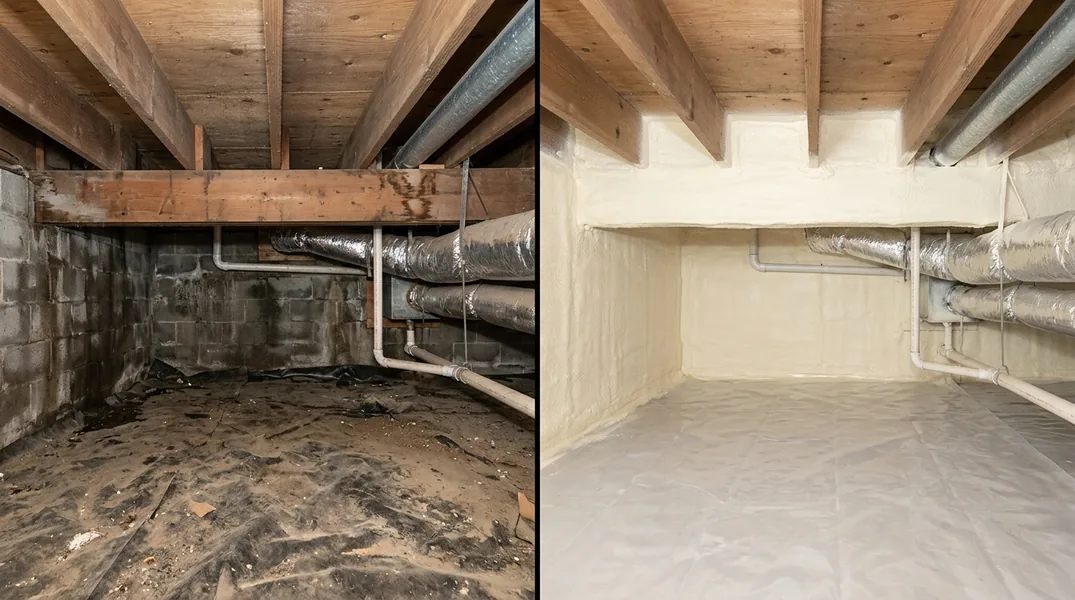
Closed Cell Spray Foam Insulation is fundamentally different from traditional materials. Its structure consists of tiny, closed cells that are completely sealed from one another, creating a vapor barrier as part of the insulation itself. This means moisture cannot penetrate the foam or accumulate within it, making it ideal for attics that face Dayton's humid summers and variable winters.
When Closed Cell Spray Foam Insulation is applied to your attic, it expands to fill every gap, crack, and void. Unlike batts that leave air spaces and seams, spray foam creates an air-tight seal that prevents both air infiltration and moisture movement. This dual protection means your attic stays drier, your insulation stays effective year-round, and your roof framing is protected from rot and decay. The R-value of closed cell foam (typically R-6 to R-7 per inch) also means you need less thickness to achieve superior thermal performance compared to fiberglass.
Winter Dryness and the Risk of Air Leakage
While summer humidity gets most of the attention, Dayton's winter conditions pose their own challenges. The cold, dry air outside creates a pressure difference that actually pulls air into your attic through gaps and cracks. This infiltration of unheated outside air forces your heating system to work harder, driving up energy bills. Worse, that cold air can create cold spots in your living spaces below, leaving you feeling uncomfortable despite running the furnace constantly.
Traditional insulation materials have gaps between batts and around penetrations like electrical boxes, plumbing vents, and HVAC ducts. These gaps allow winter air to bypass the insulation entirely. Open Cell Spray Foam Insulation and closed cell foam both eliminate these pathways by expanding into every cavity and sealing around all obstacles. The result is a truly tight, efficient attic that maintains consistent temperatures and reduces the load on your heating system. Many homeowners report noticeable energy savings within their first winter after upgrading to spray foam insulation.
Attic Spray Foam Insulation Near Me: When to Call a Professional
If you're noticing signs of attic problems, it's time to call in experts who understand Dayton's climate challenges. Signs include musty odors in your home, visible moisture stains on attic wood, higher than normal energy bills, or cold spots in certain rooms during winter. These are all indicators that your current insulation is failing and moisture is present in your attic space. Attempting to address these issues with traditional insulation alone is unlikely to solve the underlying problem permanently.
Professional installation of Attic Spray Foam Insulation requires specialized equipment and trained technicians who understand proper application techniques, ventilation requirements, and local building codes. At Dayton Spray Foam Insulation, our team has years of experience working in attics throughout the region and understands exactly how local climate conditions affect insulation performance. We can assess your current situation, recommend the right foam type for your specific needs, and ensure the job is done right the first time. Contact us at (937) 800-4951 or request a free estimate to get started.
Spray Foam Attic Insulation Cost in Dayton: What to Budget
The cost of upgrading your attic with spray foam insulation depends on several factors, including the size of your attic space, the current condition of existing insulation, the type of foam selected, and the complexity of the installation. Closed Cell Spray Foam Insulation typically costs more per board foot than open cell options, but its superior moisture resistance and higher R-value per inch often justify the investment in humid climates like Dayton. Most homeowners find that energy savings over time offset the initial investment.
Rather than guessing at pricing, the best approach is to get a professional assessment. Every attic is different, and a thorough evaluation allows us to provide an accurate quote tailored to your home's specific needs. Many homeowners are surprised to learn that spray foam insulation is more affordable than they expected, especially when they factor in long-term energy savings and the elimination of future moisture-related repairs. Call Dayton Spray Foam Insulation at (937) 800-4951 today to discuss your attic insulation needs and receive a detailed free estimate with no obligation.
Looking for a professional spray foam insulation contractor in Dayton? Dayton Spray Foam Insulation responds fast for all your spray foam insulation needs.
Get a Free Quote